
Dynamics Monitor
Strategic Assessment: The Disruption of Qatari LNG and Global Market Implications (2026–2030)
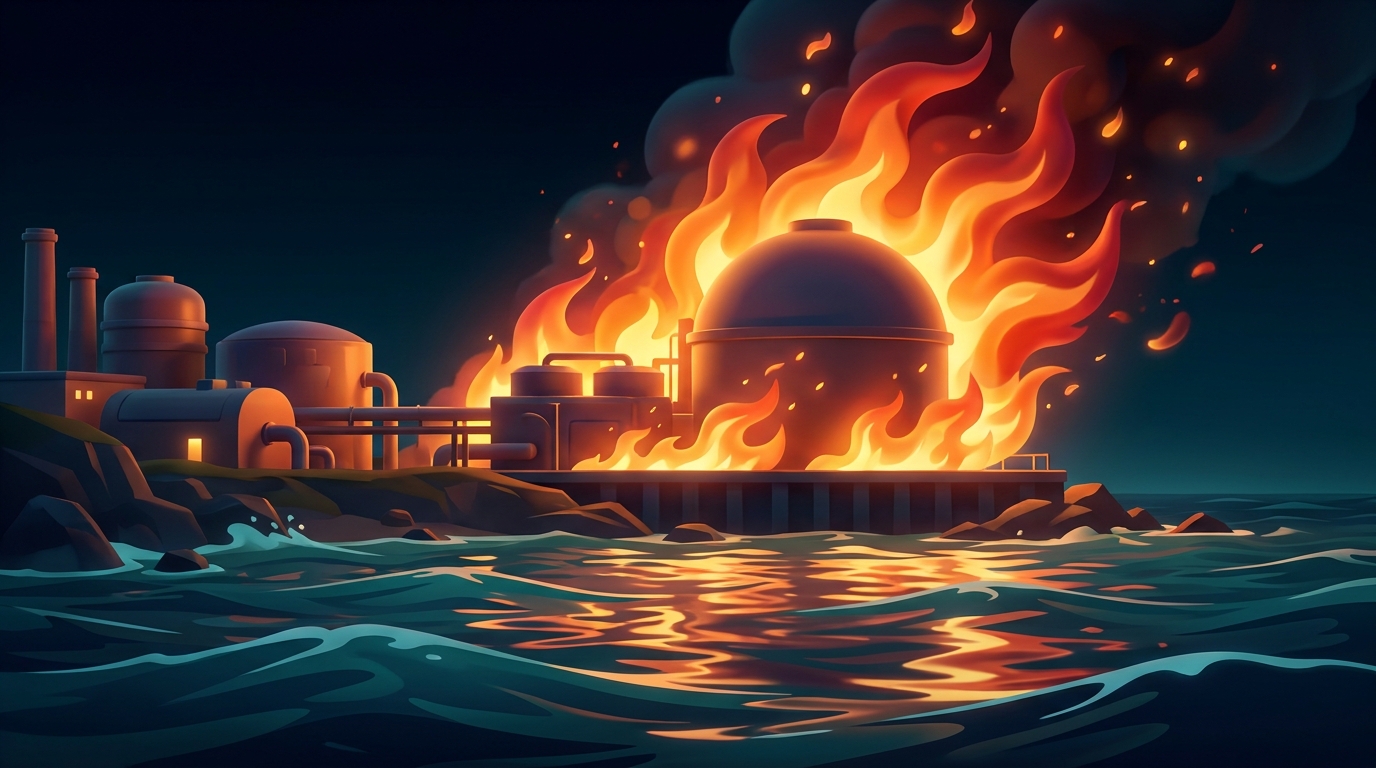
In March 2026, Iranian drone and missile strikes critically damaged Qatar’s energy infrastructure within the Ras Laffan and Mesaieed industrial areas, forcing an immediate halt to QatarEnergy’s liquefied natural gas (LNG) production. Because Ras Laffan hosts the world’s largest LNG export complex and processes roughly 20 percent of global supply, this disruption triggered massive shockwaves across global gas markets. Assessments reveal that two of Qatar’s fourteen LNG trains and one gas-to-liquids (GTL) facility sustained permanent damage, wiping out 12.8 million tonnes per annum (mtpa) of export capacity. This capacity will remain offline for a projected three to five years, effectively removing about 17 percent of Qatar’s baseline LNG capacity and roughly 3 percent of global LNG trade. Consequently, the attacks have transitioned from a temporary operational pause into a multi-year structural supply deficit.
Physical and Financial Damage Profile
The immediate quantitative impact of the strikes represents a massive financial and physical blow to QatarEnergy. Prior to the attacks, Qatar operated roughly 77 mtpa of liquefaction capacity, exporting 77–79 million tonnes in 2023–2024 as the world’s third-largest LNG exporter.

The structural damage removes a highly specific volume of natural gas from the market, translating into severe cumulative revenue losses. Using standard conversion metrics (1 mtpa of LNG corresponds to roughly 1.38 billion cubic meters [bcm] of natural gas), the offline trains represent a physical supply loss of 17.6–17.7 bcm per year.
| Metric | Annual Impact | 3-Year Outage Scenario | 5-Year Outage Scenario |
| Lost Physical LNG Volume | 12.8 million tonnes | 38.4 million tonnes | 64 million tonnes |
| Lost Natural Gas Equivalent | ~17.6–17.7 bcm | ~52–53 bcm | ~88 bcm |
| Lost Export Revenue | ~$20 billion USD | ~$60 billion USD | ~$100 billion USD |
| Sunk Infrastructure Costs | N/A | $26 billion USD (total cost of damaged facilities) | $26 billion USD (total cost of damaged facilities) |
Note: Over five years, the cumulative loss of ~88 bcm is roughly equal to more than half of the EU’s annual pipeline gas imports from Russia in the late 2010s, underscoring the magnitude of the disruption.
Short-Run Market Equilibrium (0–12 Months)
While the physical loss of 12.8 mtpa accounts for only about 3.1 percent of the 411.24 million tonnes traded globally in 2024, the immediate market reaction was violently disproportionate. This dynamic occurred because the market had to price in both the permanent asset shock and the acute risk of a temporary shipping bottleneck in the Strait of Hormuz, which normally facilitates roughly 20 percent of global LNG shipments.
- Price Spikes: Immediately following the production halt, European benchmark Dutch TTF gas prices surged 40–50 percent intraday, hitting roughly 46 euros per megawatt-hour. Over two trading sessions, TTF prices briefly surged up to 70 percent, trading above 60 euros per megawatt-hour for the first time since early 2025. Asian LNG benchmarks concurrently rose about 39 percent.
- Asian Exposure: Because Asia absorbs the bulk of Qatari LNG, Asian spot prices (JKM) rose from around 10.7 USD per million British thermal units (MMBtu) in late February 2026 to the mid-teens shortly after the attacks. If the 12.8 mtpa loss is distributed proportionally, Asia loses roughly 10 mtpa (about 13–14 bcm per year), forcing high reliance on spot cargoes.
- European Exposure: Qatar previously covered about 14 percent of EU LNG imports (15.1 million tonnes) in 2023, though this fell to about 7 percent by 2025. A pro-rata allocation of the outage puts 2.4–2.5 mtpa (3.3–3.5 bcm per year) of European-bound LNG at risk. Furthermore, analysts at Goldman Sachs warned that a full month-long shutdown of Hormuz could push TTF prices to around 74 euros per megawatt-hour, or roughly 130 percent above pre-crisis levels.
- Demand Adjustment: The massive 40–70 percent price spikes against a 3 percent structural supply loss indicate extremely low short-run demand elasticity. Adjustment relies entirely on painful price-induced fuel switching, such as power generators shifting to coal, and demand destruction.
Medium-Run Equilibrium (1–5 Years)
Moving out of the initial panic phase, the market outlook for the late 2020s is fundamentally reshaped, though less catastrophic than initial pricing suggested. Between 2025 and the early 2030s, the global market was preparing for a massive influx of roughly 360 bcm per year (around 260–265 mtpa) of new LNG export capacity.
The loss of Qatar’s 12.8 mtpa acts as a moderating force against this impending oversupply, rather than creating a permanent global deficit.
| Global Market Dynamics | Pre-Attack Projections | Post-Attack Realities (2026-2028) |
| New Capacity Wave (2026-2028) | ~170 mtpa expected to come online globally. | New additions reduced by only 7–8% due to the Qatari outage. |
| Total Global Liquefaction Capacity | Projected to reach ~664 mtpa by the late 2020s. | Limited to ~651 mtpa, representing a minor 1.9% reduction from the baseline. |
| Pricing Environment | Anticipated structural oversupply. | Tighter balances keeping prices elevated; BofA forecasts TTF averaging near 50 EUR/MWh in 2026. |
During this medium-run phase, QatarEnergy will likely have to invoke force majeure on long-term contracts up to the full repair horizon. Counterparties will be forced to rapidly diversify, signing new long-term contracts with US, African, and Australian projects.
Long-Run Outlook (Post-2030) and Qatar’s Strategic Position
Despite the severe three-to-five-year setback, the long-term fundamentals of both the global LNG market and Qatar’s export dominance remain largely intact.
Prior to the attacks, Qatar was executing massive North Field expansion projects (North Field East, South, and West) aimed at adding 49 mtpa of new capacity to reach 126 mtpa by 2027–2028, and 142 mtpa by 2030. Even assuming the 12.8 mtpa of damaged legacy infrastructure is never rebuilt, Qatar’s net capacity will still aggressively expand to roughly 129 mtpa by 2030. Consequently, Qatar will command a larger export role than it did before the attacks, albeit from a reshaped asset base.
Globally, by 2030, total liquefaction capacity is projected to exceed today’s levels by more than 40 percent. In this hyper-expanded market, a 12.8 mtpa shortfall constitutes well under 2 percent of total global capacity, rendering it a second-order factor in long-run pricing.
Ultimately, the most durable market consequence of the 2026 Iran attacks will not be a permanent physical shortage of natural gas, but rather the institutionalization of a geopolitical risk premium. Repeated threats to Ras Laffan and the Strait of Hormuz will compel financiers and buyers to heavily favor geographically diversified portfolios. Over the long run, this will shift marginal capital toward LNG projects in lower-risk jurisdictions like the United States and Africa, slightly raising the required return for any future Middle Eastern energy investments.


Japan’s Monetary Intervention and the Cost of Imported Cars

Iran’s Oil Infrastructure Under Blokade: Production Decline And Recovery Constraints

The Hormuz Shock: How a Closed Strait Is Redrawing the World’s Energy Map

A Commodity Forecast for Middle Eastern Economies Under El Niño

Fragile Regional Security: Targeting Strategic Infrastructure in the Gulf States
-

 Dynamics Monitor6 months ago
Beyond Sanctions: Evaluating Iran’s Economic Adaptation and the Viability of a 2026 Naval Blockade
-

 Policy Compass6 months ago
These \’90s fashion trends are making a comeback in 2017
-

 Policy Compass6 months ago
These \’90s fashion trends are making a comeback in 2017
-

 Future Radar6 months ago
The final 6 \’Game of Thrones\’ episodes might feel like a full season