
Dynamics Monitor
Situation Assessment: Navigating the Mine Threat in the Strait of Hormuz
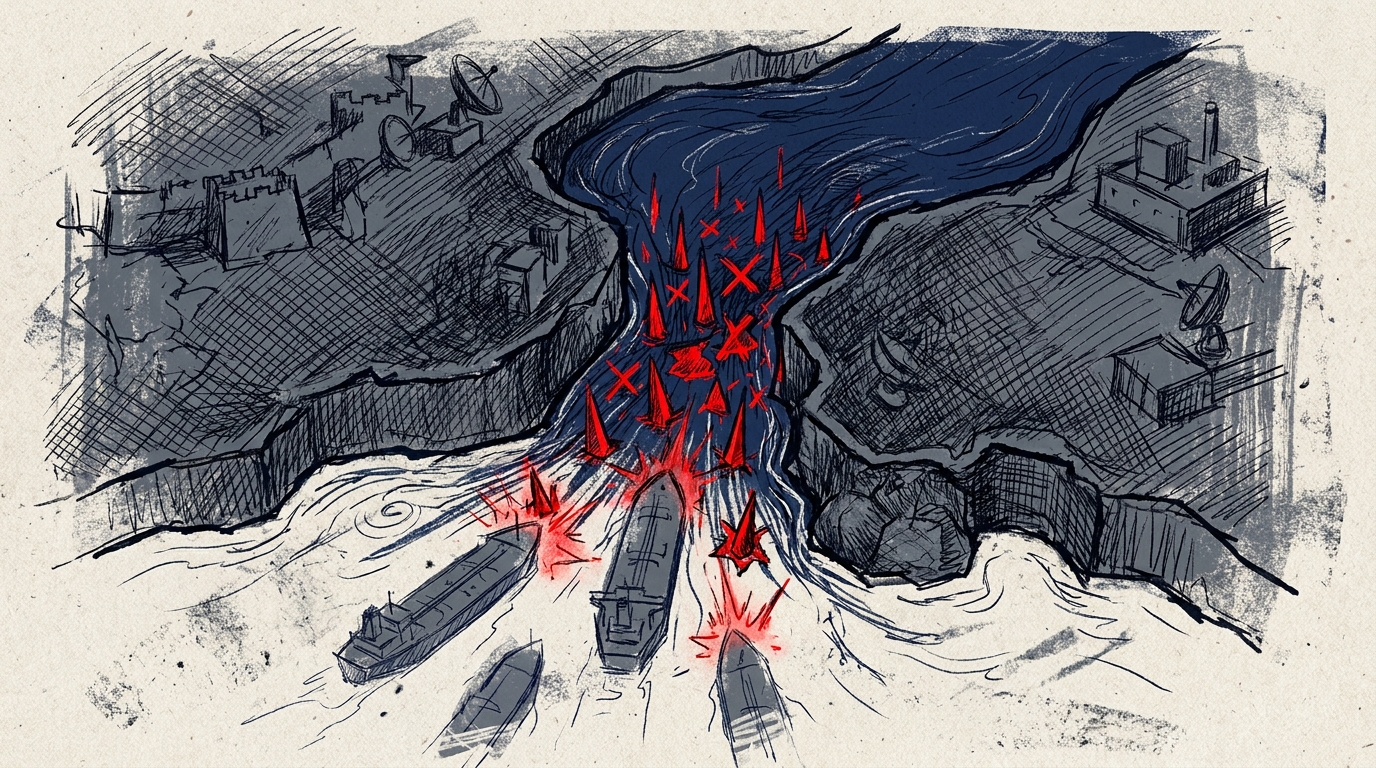
The current Iranian mining operation in the Strait of Hormuz represents a highly constrained but operationally significant threat to global shipping. Open-source intelligence indicates that Iran has deployed only a small fraction of its estimated 2,000–6,000 naval mine stockpile, with current estimates clustering around 10–40 advanced mines. Despite this limited deployment, the time asymmetry of mine warfare—where clearing mines takes up to 200 times longer than laying them—means that establishing a secure, governed shipping corridor will require 1–3 weeks of sustained, intensive mine countermeasures (MCM) operations. Achieving high-confidence clearance across the broader strait will require a months-long campaign. Iran’s ability to significantly escalate the mine threat is currently suppressed by heavy coalition attrition of its minelaying platforms and persistent surveillance, effectively shifting the timeline toward a localized, manageable clearance operation rather than a protracted, strait-wide interdiction campaign.
1. The Current State of the Mine Threat
The 2026 crisis is characterized by localized, limited minelaying rather than a massive saturation of the strait.
- Observed Deployment: Consistent reporting from U.S. intelligence and media sources estimates that Iran has laid roughly 10–40 mines in the strait. This deployment is explicitly described as “not extensive,” with the U.S. emphasizing that the number is “at least a dozen” or a “few dozen” devices.
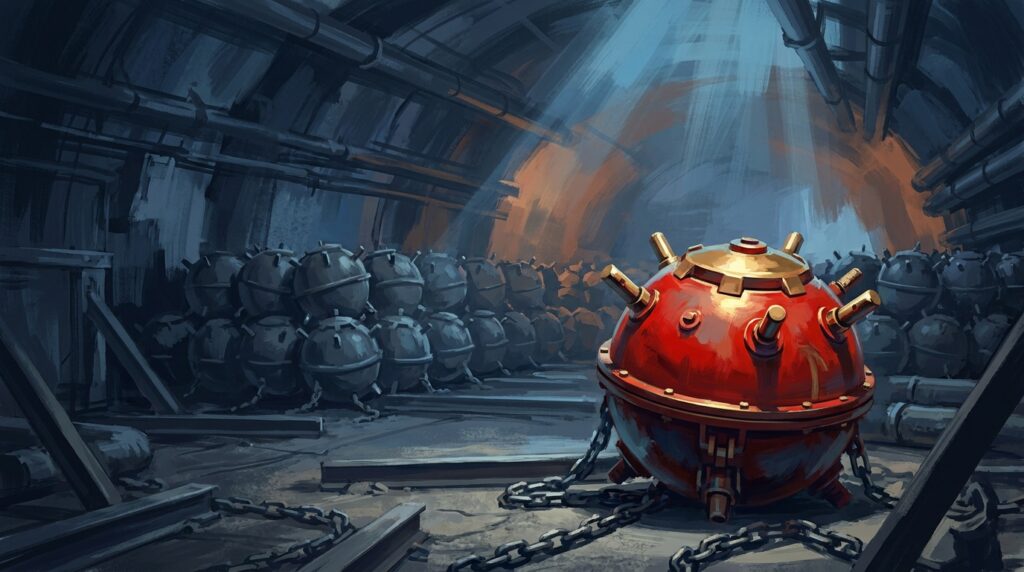
- Mine Typology: The devices deployed are advanced influence mines, specifically the Maham-3 (a moored magnetic/acoustic mine) and the Maham-7 (a compact seabed limpet mine with three-axis magnetic and acoustic sensing). Unlike legacy contact mines, these devices activate based on specific ship signatures and are designed to avoid sonar detection, vastly increasing the difficulty of clearance.
- Coalition Interdiction: A rapid coalition response has severely degraded Iran’s forward minelaying capacity. U.S. and Israeli strikes have destroyed more than 60 Iranian naval vessels, including approximately 16 specialized minelaying craft.
- Residual Capacity: Despite these losses, Iran retains 80–90% of its small-boat fleet. These surviving platforms theoretically provide the capacity for further minelaying, but ongoing coalition surveillance and the contested environment make large-scale, undetected minelaying highly improbable.

2. Iranian Stockpiles vs. Deployment Realities
While Iran’s theoretical arsenal is robust, its practical application is currently stifled.
- Total Inventory: Iran’s naval mine stockpile is estimated to contain between 2,000 and 6,000 devices. This arsenal includes both older contact mines and modern smart/influence mines, built through domestic production and imports.
- Platform Capabilities: Iran possesses a diverse array of minelaying platforms. Kilo-class submarines can lay roughly 24 mines per sortie, Ghadir-class midget subs can lay 8–16, and small boats can typically carry 2–6 mines. Small boats are considered the primary threat vector due to their sheer numbers and low profiles.
- Operational Constraints: A massive deployment of the stockpile is constrained by the surviving platform count, sortie times, and the extreme risk of coalition interdiction. Furthermore, reports indicate Iran has struggled with minefield management, failing to locate its own previously laid mines to reopen traffic, suggesting systemic weaknesses in its deployment strategy.
3. Geographic Geometry and Clearance Objectives
The Strait of Hormuz’s geography dictates the scale of the MCM challenge.
- Chokepoint Dimensions: The strait is 30–60 nautical miles wide, narrowing to 21 miles at its tightest point.
- Traffic Separation Scheme (TSS): Commercial shipping relies on a TSS comprising two 2-nautical-mile-wide lanes separated by a 2-mile buffer, totaling a 6-mile width. The TSS stretches approximately 100 nautical miles, representing a total area of about 600 square nautical miles. Depths range from 60 to 100 meters.
- Prioritized Clearance: Iran would likely target the main lanes and choke points to channel traffic or damage vessels. Therefore, coalition MCM forces will not attempt to immediately clear the entire 600 square miles. Instead, initial efforts will focus on sweeping one or two narrow corridors (totaling 200–300 square nautical miles) to establish safe, governed transit routes.
4. Clearance Dynamics: The Time Asymmetry of Mine Warfare
Mine clearance is inherently slow, methodical, and resource-intensive, governed by the reality that clearing a minefield takes significantly longer than laying one.
- The 200:1 Rule: U.S. Navy doctrine states that clearing a minefield can take up to 200 times longer than laying it. This reflects the requirement for multi-pass detection, classification, and neutralization to achieve the 99%+ confidence levels required for commercial shipping.
- Historical Precedent: Following the 1991 Gulf War, where Iraq laid roughly 1,270 mines, a massive multinational MCM effort took over six months to declare the primary channels safe.
- Modern MCM Forces: While the U.S. is deploying advanced autonomous underwater vehicles (AUVs) and dedicated MCM ships, these forces are relatively small and not designed for rapid clearance under active missile and drone threats. Intensive operations in peacetime typically clear only tens of square nautical miles over several days.
5. Quantitative Scenarios and Projected Timelines
The following table synthesizes three analytical scenarios based on current intelligence, historical precedents, and MCM operational realities. These estimates distinguish between opening an initial “governed corridor” (a partially cleared, escorted route) and achieving “high-confidence clearance” across the wider strait.
| Scenario | Estimated Mines in Water | Time to Establish a Governed Corridor (200–300 sq nm) | Time for High-Confidence Clearance | Rationale & Context |
| Baseline (Current) | 10–40 | 1–3 Weeks | 2–3 Months | Assumes intensive, focused MCM operations against the currently deployed Maham-3/7 mines. Assumes successful coalition suppression of further minelaying. |
| Moderate Escalation | 200–400 | 3–6 Weeks | 4–8 Months | Assumes Iran utilizes surviving small boats (20-30 craft) for multiple night sorties before being neutralized. Clearance requires expanded, parallel lane sweeping. |
| Worst-Case Plausible | 500–700 | 1.5–3 Months | 6–12 Months | Assumes a sustained, multi-platform minelaying campaign before severe attrition. Clearance operations are significantly slowed by the need to manage concurrent drone/missile threats. |
6. Strategic Implications
The Iranian mine threat in the Strait of Hormuz is currently characterized by a low physical volume of devices but a disproportionately high strategic impact.
- Asymmetric Disruption: The deployment of just a few dozen advanced influence mines has successfully disrupted global energy transit by leveraging the time-intensive nature of clearance operations. The mere presence of mines forces the immediate suspension of unescorted traffic and drastically inflates insurance premiums.
- The Interdiction Imperative: The timelines above are highly contingent on the coalition’s ability to prevent further minelaying. If Iran can consistently deploy even small numbers of mines (e.g., 5-10 per week), they can effectively reset the clearance clock, trapping the coalition in a continuous loop of detection and neutralization.
- Expectation Management: Reopening the strait is a weeks-scale problem, not a days-scale problem. Even under the most optimistic baseline scenario, commercial operators and global markets must prepare for 1-3 weeks of constrained, escorted transit before a high-confidence, comprehensive clearance of the wider strait can be achieved over the subsequent months.


Japan’s Monetary Intervention and the Cost of Imported Cars

Iran’s Oil Infrastructure Under Blokade: Production Decline And Recovery Constraints

The Hormuz Shock: How a Closed Strait Is Redrawing the World’s Energy Map

A Commodity Forecast for Middle Eastern Economies Under El Niño

Fragile Regional Security: Targeting Strategic Infrastructure in the Gulf States
-

 Dynamics Monitor6 months ago
Beyond Sanctions: Evaluating Iran’s Economic Adaptation and the Viability of a 2026 Naval Blockade
-

 Policy Compass6 months ago
These \’90s fashion trends are making a comeback in 2017
-

 Policy Compass6 months ago
These \’90s fashion trends are making a comeback in 2017
-

 Future Radar6 months ago
The final 6 \’Game of Thrones\’ episodes might feel like a full season