
Dynamics Monitor
Beyond Sanctions: Evaluating Iran’s Economic Adaptation and the Viability of a 2026 Naval Blockade
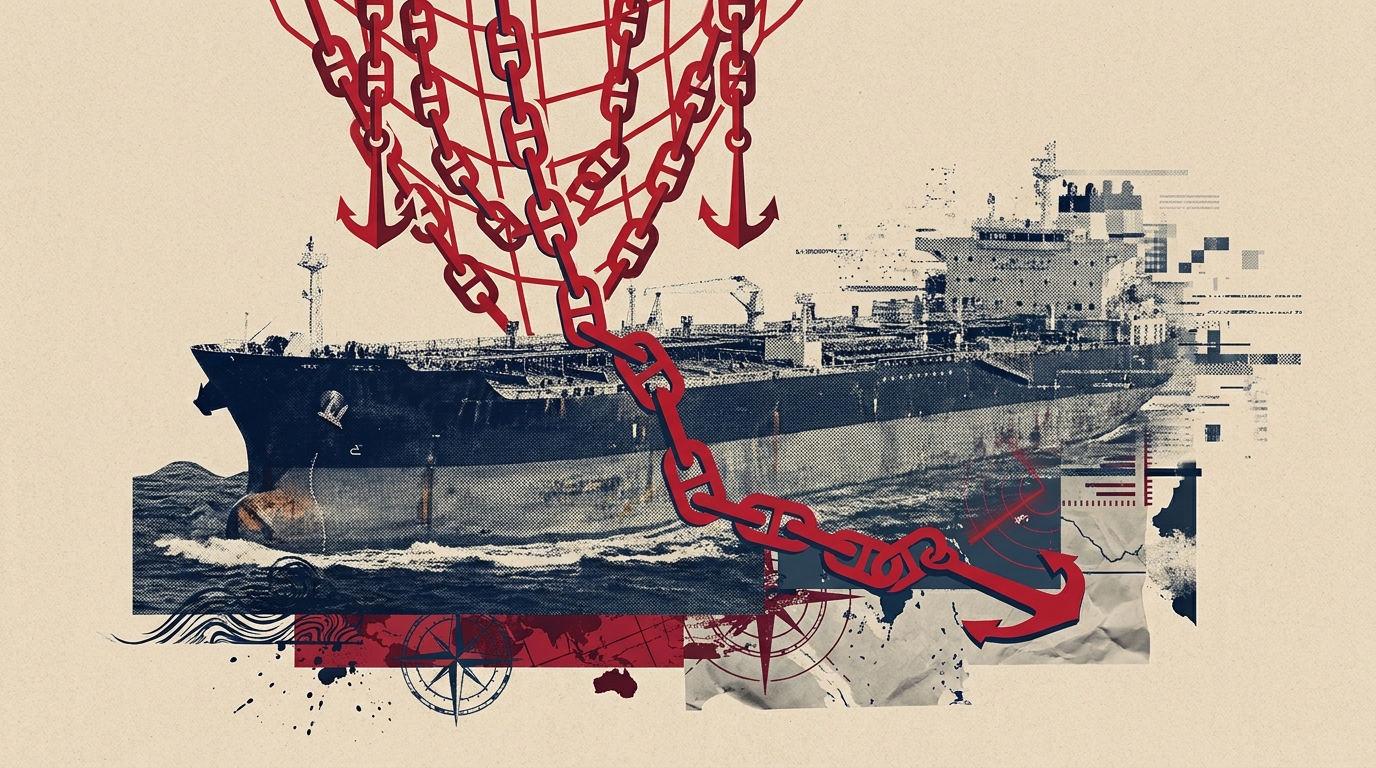
Since the U.S. withdrawal from the Joint Comprehensive Plan of Action (JCPOA) in 2018, Washington’s strategy of “maximum pressure” has inflicted massive, quantifiable macroeconomic damage on Iran. However, this economic warfare has ultimately failed to permanently suppress Iranian oil exports or secure durable strategic capitulation. As a result, the U.S. has initiated an escalatory naval blockade in 2026 to transition from legal-financial sanctions to the physical interdiction of maritime trade. While sanctions triggered severe recessions and persistent inflation, Iran’s successful adaptation via shadow logistics and pivot to Asian markets exposes critical enforcement gaps that the new blockade must overcome to be effective.
Macroeconomic Trajectory Under Sanctions
The economic toll of the 2018–2025 sanctions regime was immediate and severe, pushing the Iranian economy into a deep contraction before it stabilised into a period of constrained, low-quality growth.
- GDP and Output: Prior to sanctions, Iran’s GDP peaked at approximately $644 billion in 2012. The reimposition of sanctions in 2018 drove growth down to -2.25% in 2018 and -2.65% in 2019, inducing a sharp recession. After multiple years of contraction, the economy saw four consecutive years of post-trough expansion, with GDP recovering to the $400–440 billion range by 2023–2024. Specifically, 2024 GDP was recorded at $436–437 billion with growth estimates ranging between 3.7% and 8%. However, 2025 IMF projections forecast weak growth of just 0.6%, highlighting structural underperformance.
- Inflation and Currency Dynamics: Iran has historically battled chronic inflation, averaging 18% over the long run due to domestic fiscal mismanagement. Sanctions exacerbated this, functioning as an “inflation weapon” that triggered currency depreciation and forced deficit financing. Headline Consumer Price Index (CPI) inflation remained above 40% through the mid-2020s, accelerating to 48.6% year-on-year by October 2025.
Socioeconomic Impact on Households
The localised impact of these macroeconomic indicators has been devastating for Iranian citizens. The combination of import compression, trade diversion, and currency devaluation has systematically eroded household welfare.
- Poverty Expansion: An estimated 36% of Iranians now live on less than $8.30 per day (2021 PPP).
- Cost of Living Crisis: Following the removal of subsidized exchange rates for essential imports, food price inflation spiked to roughly 99% year-on-year in early 2026. This severe deterioration forced the government to issue emergency voucher programs of about 10 million rials per person (approximately $7 USD) for 80 million citizens.
Oil Exports and Shadow Logistics
Oil exports are the primary battleground of U.S. sanctions, as the sector historically accounted for 18% of Iran’s GDP and a quarter of government revenues. Iran’s ability to recover from the initial shock of the 2018 sanctions defines the current strategic stalemate.
| Metric | Pre-Sanctions (2016–2017) | Maximum Pressure Trough (2019–2020) | Sanctions Evasion Recovery (2024–2025) |
| Export Volume | > 2.5 million bpd | ~400,000 bpd | 1.5–1.8 million bpd (Peaks: 2.1–2.3M bpd) |
| Annual Revenue | $41–$53 billion | $8–$9 billion | $46–$50 billion (annualized estimate) |
| Market Access | Global | Highly Restricted | 85–90% routed to China |
| Price Discount | Market Rate | Steep Discounts | $5–$10 below Brent crude |
Structural Adaptation: Iran achieved this recovery by utilizing an expansive “shadow fleet” of older tankers that obscure their cargo origins through falsified AIS signals and ship-to-ship transfers. The vast majority (85–90%) of this crude is destined for China, utilizing intermediaries in the UAE, Malaysia, and Singapore.
Production Capacity Risks: Despite robust export volumes, Iran’s domestic production capacity is at risk. While output reached as high as 4 million bpd in 2024, sanctions-driven technology and investment gaps mean mature fields will likely face a 5–8% annual decline without major capital injections, threatening upstream capacity over the next 5–10 years.
Strategic Outcomes: Nuclear and Regional Posture
Measured against explicit U.S. geopolitical objectives, the sanctions regime has returned mixed results:
- Nuclear Program: Sanctions failed to halt short-term uranium enrichment. Even direct kinetic strikes by the U.S. on Iranian facilities like Fordow and Natanz in 2025 only delayed nuclear capabilities by a few months to two years, proving that economic pressure and limited strikes cannot eliminate a determined program.
- Regional Capabilities: Iran maintains substantial proxy networks, drone, and ballistic missile capabilities. Earning $3.9–$4.2 billion monthly from discounted oil provides sufficient hard currency to fund these asymmetric warfare tactics. Though salvos have decreased in frequency due to counter-force efforts, Iran has successfully shifted to highly precise, high-value targeting.
The 2026 Naval Blockade and Forward-Looking Scenarios
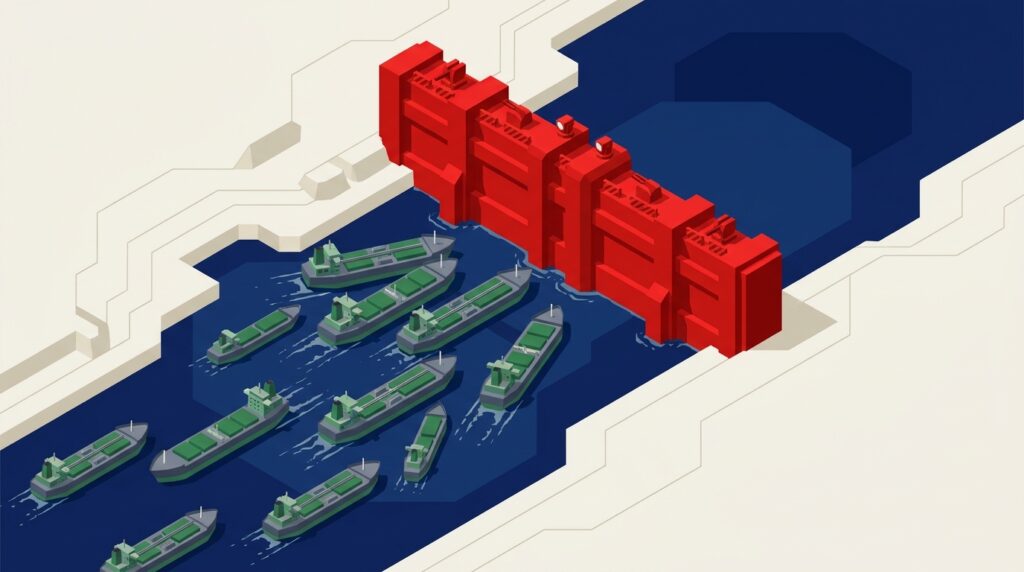
Recognising the failure to push exports below 1 million barrels per day, the U.S. initiated a naval blockade in April 2026. Framed as a “medium-risk, high-reward” alternative to ground warfare, the blockade physically targets the shadow fleet and maritime export routes. Its success is wholly dependent on the U.S. willingness to confront Chinese-bound shipping and intercept deceptive tankers without triggering massive regional escalation.
The assessment outlines three quantified scenarios for the blockade’s effectiveness:
| Scenario | Enforcement Level | Export Volume Impact | Financial Impact | Macroeconomic Result |
| 1: Tight Blockade | Robust coalition; Chinese compliance forced. | Falls below 500,000–800,000 bpd (60–75% reduction). | Revenue drops to $8–$15 billion annually. | Deep recession, soaring inflation, severe balance-of-payments crisis. |
| 2: Partial Blockade | Focus on easy targets; avoids confronting China directly. | Falls modestly to 1.2–1.5 million bpd (20–40% reduction). | Revenue stays at $25–$40 billion annually. | Prolonged stagnation, core nuclear/military programs remain funded. |
| 3: Backlash | Poorly managed; triggers Iranian retaliation in the Gulf. | Unpredictable, but losses offset by spiking global oil prices. | Uncertain; may improve unit revenues despite volume drops. | Increased global shipping costs, elevated allied enforcement costs. |
Conclusion
While U.S. economic pressure since 2018 has successfully imposed tens of billions of dollars in costs, triggered initial recessions, and cemented high poverty rates, it has failed as an instrument of decisive strategic coercion. Iran’s domestic substitution and pivot to China restored exports to 60–90% of pre-sanctions volumes, generating up to $50 billion annually to fund its strategic objectives. The emerging naval blockade has the theoretical potential to collapse the Iranian economy by driving exports back below 1 million bpd. However, unless the U.S. can successfully sever the China-bound shadow logistics network without sparking a global shipping crisis, the blockade risks repeating the pattern of the sanctions era: imposing severe economic pain without altering Iran’s fundamental strategic posture.


Japan’s Monetary Intervention and the Cost of Imported Cars

Iran’s Oil Infrastructure Under Blokade: Production Decline And Recovery Constraints

The Hormuz Shock: How a Closed Strait Is Redrawing the World’s Energy Map

A Commodity Forecast for Middle Eastern Economies Under El Niño

Fragile Regional Security: Targeting Strategic Infrastructure in the Gulf States
-

 Policy Compass6 months ago
These \’90s fashion trends are making a comeback in 2017
-

 Policy Compass6 months ago
These \’90s fashion trends are making a comeback in 2017
-

 Future Radar6 months ago
The final 6 \’Game of Thrones\’ episodes might feel like a full season
-
Future Radar6 months ago
The final 6 \’Game of Thrones\’ episodes might feel like a full season